


Introduction:
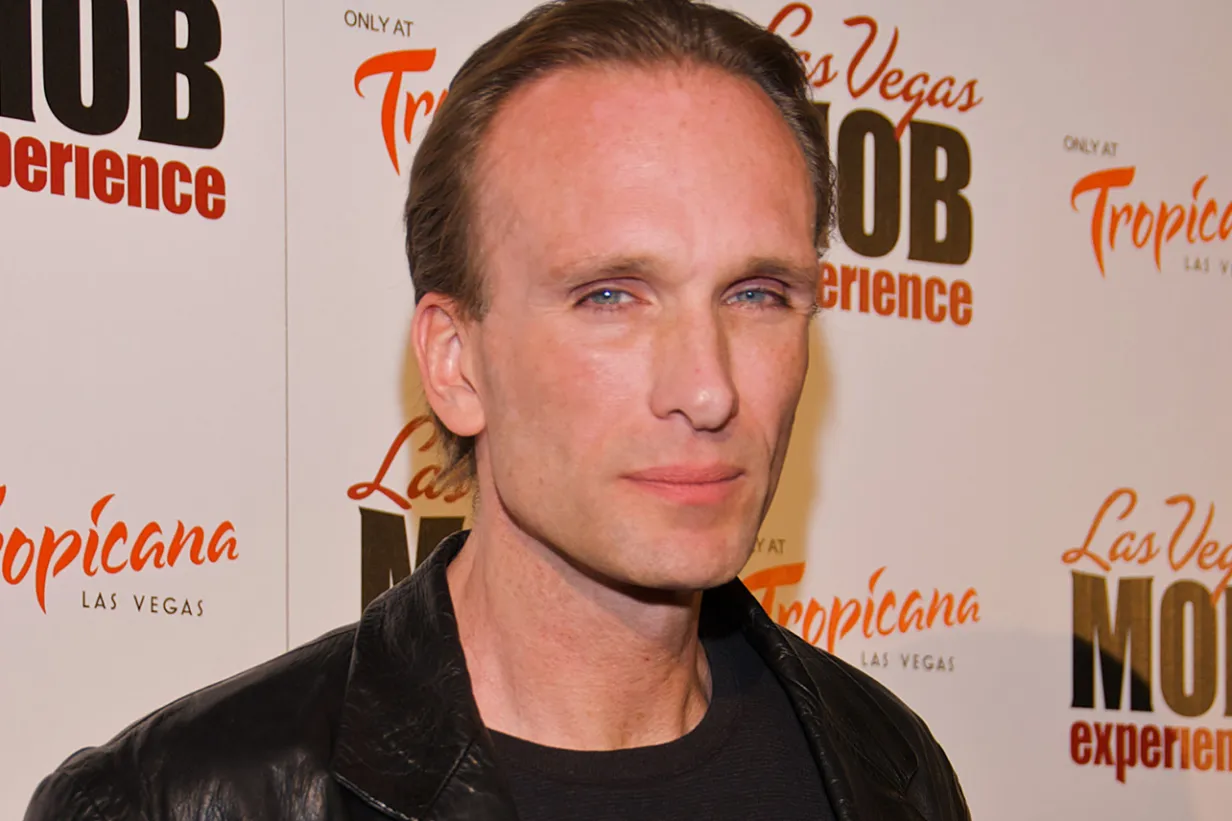
Peter Greene is one of America’s defining character actors, and he is known for the strong emotional impact of his work rather than for its luxury. He has developed a career that is based on the power of his performances to evoke heightened emotion, as well as their power to convey true-to-life situations. Whether he appears in blockbuster movies or independent films, the work of Peter Greene will always stay in the memory of audiences; his screen presence exudes such rawness that even the briefest of appearances are just as memorable as his longer roles.
This blog will provide a comprehensive look into the life of Peter Greene, including an account of his youth, early struggles, the roles that defined him, his personal experiences, his challenges as an actor, the legacy he has left behind, and how he contributed to the cultural climate of his time, as well as the quieter ways in which he has impacted film history.
Table of Contents
Who Is Peter Greene?
Early Identity and Background
Peter Greene’s personal history started on October 8, 1965, in Rhode Island’s sunny beach state. This difficult upbringing was characterised by challenges and adversity rather than the comforts of having money, family, and success. The result of this experience was the emotional range and depth that Greene developed during his life as an actor.
Although Greene was not shaped by the glamour and hype of so-called “celebrity culture“, he developed a strong sense of self and an understanding of what it means to be human by overcoming the same obstacles and hardships many people face.
Peter Greene Young and the Formation of His Personality
In reviewing the early years of his life, he is reflective and continually seeking an understanding of himself and the world around him through contemplation, thought, ht and self-reflection. As a result of his early experiences, he became a person who could observe himself emotionally and could identify the underlying emotions of himself, his actions, and his needs.
Acting served as an outlet for Greene’s emotional expression and identity growth, as he drew on his experience of facing similar struggles to perform at a high level.
Discovering Acting as a Lifeline
Greene’s entry into acting was non-traditional. He achieved success through perseverance, rather than being discovered overnight. He learned how to control himself with training and early acting experience, which helped him develop his inherent intensity into a more structured way. During these times, he developed skills such as control, focus, and emotional balance, which ultimately gave him a strong presence when acting on screen. His ability to portray characters with more authenticity than simply being attractive began to attract attention from casting directors.
Career Breakthrough and Rise in Hollywood:
Early Film Roles and Industry Attention
His first several years as an actor were comprised of small character parts that highlighted his overall talent as a screen actor with a commanding presence on screen. Despite his limited amount of time on a screen as an actor, Peter Greene infuses his performances with the gravitas and emotional intensity necessary for the roles he plays. His unique combination of menace and vulnerability has endeared him to the motion picture industry as a dependable supporting actor and has allowed him to enhance virtually any scene in which he appears.
Peter Greene: The Mask and Mainstream Recognition
One of the most critical points in Peter Greene’s career was his role as Dorian Tyrell in the 1994 movie adaptation of The Mask. He plays the villain, and even though the overall film is quite exaggerated in its composition, Pete Greene made the antagonist’s threat appear to be very real. The seriousness with which Dorian pursues his murderous intent is offset by the more chaotic and goofy humor of Jim Carrey‘s character.
Through the restraint and calm manner with which Peter performs his character, he makes the conflict between Dorian and the Mask believable and gives the film a strong emotional footing. This film, like so many others, served to expose Peter Greene to a much larger public and solidified his position in the public consciousness because it is a movie that has been seen by so many people.
The Impact of The Mask on His Career Path
After his performance in the film “The Mask“, the actor Jim Greene was often seen in the media as playing psychotic and/or pathological characters, while at the same time opening up numerous avenues for future work. He was now typecast in similar roles, yet did not shy away from them, but rather embraced them and approached them from an emotional depth perspective, choosing roles that allowed him to create characters with depth and complexity. This emotional connection and character complexity shaped and continued to shape his career identity over the course of many years.
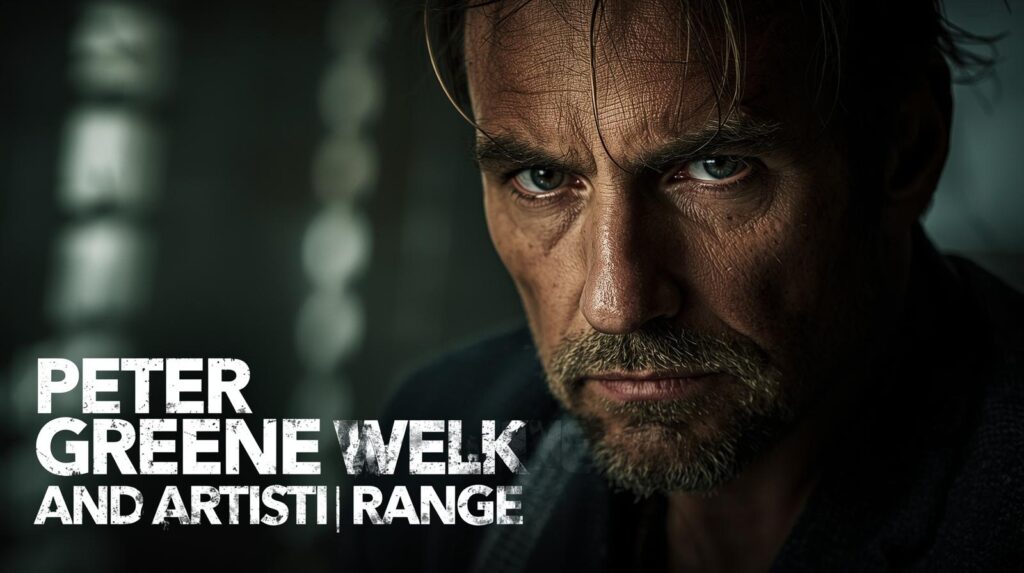
Peter Greene Movies and Artistic Range:
Independent Cinema as a Creative Home
Independent cinema served as the platform for Peter Greene’s creative work. Unlike mainstream films, which provided opportunities for visibility, independent films gave Peter Greene more freedom to be creative.
Numerous Peter Greene films available in the independent arena enabled him to develop multi-dimensional characters who had emotional ranges and psychological nuances; most often, these independent films deal with subject matter concerning the following issues: Isolation, internal conflict, and ethical ambiguity. In this type of environment, Greene succeeded at delivering very honest and present-day performances.
Clean, Shaven and Critical Acclaim
Clean Shaven is one of Peter Greene’s most acclaimed performances. In this film, Greene portrays a man who experiences schizophrenia with both sensitivity and a subtle touch. Rather than overdoing it, Greene relied on a range of emotional changes that were very subtle and realistic to give the impression of being a real person. The public received his performance with high praise, and it continues to be a major highlight in Greene’s career.
Pulp Fiction and Cultural Immortality
Although his screen time in Pulp Fiction was limited, his performance left a lasting impact on the viewer. He was responsible for creating one of the film’s most disturbing scenes, demonstrating how well he could make an impression despite limited screen time. This performance also reinforced Greene’s strong reputation as a powerful character actor in the 1990s.
Television Work and Later Film Roles
Despite having little screen time in Pulp Fiction, Peter Greene’s performance had a profound effect on the audience. Despite having little screen time, he was in charge of one of the most unsettling scenes in the movie, proving how effective he could be. Greene’s solid reputation as a potent character actor in the 1990s was further strengthened by this performance.
Acting Style and On-Screen Presence:
Emotional Realism and Psychological Depth
He is an actor whose emotional realism defines his style of acting. By allowing emotional expression to manifest organically, rather than through hyperbole or excessive display, Greene’s acting style creates naturally occurring emotional outpourings on-screen. Greene’s portrayals often appear to come from a well-developed character that exceeds the limitations of the script; thus, audiences can connect with Greene’s characters even when the characters’ spoken dialogue is limited or nonexistent and have a clear sense of the character’s inner conflict, background, and motivation.
Physicality and Voice Control
Using deliberate movement patterns and control over pacing, Greene builds tension through controlled physical activity and the implementation of a still body. Greene’s still body can create more drama than movement. Greene’s voice has a “calm intensity”, which contributes to the believability of his characters and enhances their realism. These tenets of Greene’s acting specialties allow both the viewer and the audience to remain invested in the tension of the story as well as in the character’s development without having to rely upon excessive physical aggression.
Avoiding Stereotypes Within Typecasting
Although Greene is often typecast as an antagonist in films, he works hard to avoid falling into the trap of creating stereotypical antagonists. He creates vulnerability and complexity in his characters, allowing them to become “real people”. This ability has allowed Greene to maintain his artistic integrity throughout his career and makes his characters feel as though they are layered, emotionally grounded, and not easily simplified by anyone’s moral compass.
Personal Life, Privacy, and Public Perception:
Peter Greene’s Wife and Relationships
Interest in Peter Greene’s wife continues among fans, but confirmed information is limited. Greene has always kept his personal life private, choosing to separate it from his professional work. This discretion aligns with his overall approach to fame and public exposure, allowing him to maintain personal boundaries and avoid unnecessary media speculation.
Struggles, Addiction, and Recovery
He has been candid about his battles with addiction and how they affected his career. These difficulties resulted in times when they were out of the spotlight, but they also presented chances for development. His road to recovery is a testament to his fortitude and self-responsibility, forming a more profound comprehension of human frailty that subsequently influenced his acting.
Life Outside the Spotlight
Greene does not seek constant attention or publicity. He prefers a quieter life focused on meaningful projects. This approach has preserved his authenticity and strengthened his reputation as a serious actor, admired for commitment to craft rather than pursuit of celebrity status or public approval.
Peter Greene Net Worth and Career Economics:

Understanding His Financial Standing
The nature of character acting must be understood in order to estimate Peter Greene’s net worth. Even though he starred in popular movies, he did a lot of work in independent cinema, which usually pays less. In contrast to top stars, public estimates point to a stable but modest financial position that reflects long-term sustainability, selective projects, and steady employment rather than sudden wealth or high-profile commercial contracts.
Career Choices Over Commercial Gain
By prioritizing meaningful characters over commercial appeal, Greene maintained professional integrity and built a career defined by substance, personal growth, and lasting contribution to cinema. His decision to consistently choose roles based on creative interest rather than financial reward limited mainstream fame but ensured long-term respect and artistic fulfillment.
Legacy, Influence, and Cultural Importance:
Contribution to 1990s Cinema
The gritty realism of American cinema in the 1990s was significantly influenced by Peter Greene. His portrayals encouraged a move toward morally dubious characters and emotionally nuanced narratives. Greene contributed to a more honest cinematic language by normalizing raw, unpolished performances that represented actual human struggle rather than idealized heroism during a decade marked by darker narratives and psychological exploration.
Influence on Future Actors
Greene’s career is seen by many aspiring actors as an example of his commitment to his craft. His work shows that, even in the absence of ongoing fame, authenticity and depth can have a long-lasting effect. Greene provides an example for actors who value longevity, integrity, and meaningful artistic expression in the industry by putting emotional truth ahead of visibility.
My Thoughts on Peter Greene:
Peter Greene embodies true character acting through honest, emotionally grounded performances that embrace flawed and complex individuals. He prioritizes authenticity over fame, allowing his characters to feel real, layered, and lived-in, even in brief appearances. His career reflects resilience and artistic integrity, showing that meaningful cinema often comes from vulnerability, struggle, and a commitment to emotional truth rather than popularity.
Conclusion:
Resilience, skill, and a strong zeal for authenticity are all evident in Peter Greene’s life and career. He has always prioritized substance over fame, from his youthful self-discovery to his iconic role in The Mask and his powerful presence in independent film. Greene has stayed devoted to the art of acting rather than chasing continuous fame or financial comfort. His work shows that genuine influence in film is determined by honesty and emotional impact rather than just fame. His legacy lives on in performances that are still potent, timely, and emotionally stirring, providing audiences who value nuance, realism, and bold storytelling with enduring value.
FAQs:
Who is Peter Greene?
Peter Greene is an American character actor known for portraying intense, psychologically complex roles in both mainstream and independent films, especially during the 1990s.
When was Peter Greene born?
Peter Greene was born on October 8, 1965, in the United States.
What is Peter Greene best known for?
He is best known for playing Dorian Tyrell in The Mask and for powerful roles in films like Clean, Shaven, and Pulp Fiction.
What was Peter Greene’s role in The Mask?
In The Mask (1994), he portrayed Dorian Tyrell, the film’s primary antagonist, whose calm menace balanced the movie’s comedic elements.
Are there notable Peter Greene movies besides The Mask?
Yes, Peter Greene appeared in Clean, Shaven, Pulp Fiction, Blue Streak, The Bounty Hunter, and several independent films known for their psychological depth.
What made Peter Greene’s acting style unique?
His acting style emphasizes emotional realism, subtle expression, controlled physicality, and psychological depth rather than exaggerated performances.
Did Peter Greene work in independent cinema?
Yes, independent cinema became an important creative space for Greene, allowing him to explore complex characters and challenging subject matter.
What is Clean, Shaven about, and why is it important?
Clea, Shaven features Greene as a man with schizophrenia, and the role is widely praised for its authenticity and emotional honesty.
Was Peter Greene in Pulp Fiction?
Yes, he appeared briefly in Pulp Fiction, delivering a disturbing and unforgettable performance despite limited screen time.
Is Peter Greene still acting?
He has remained active over the years, though he takes selective roles rather than pursuing constant visibility.
What is Peter Greene’s net worth?
His net worth is estimated to be modest, reflecting steady character work rather than blockbuster leading roles.
Why was Peter Greene often cast as a villain?
His calm intensity, expressive eyes, and controlled presence made him well-suited for antagonistic and morally complex roles.
Did typecasting affect Peter Greene’s career?
While typecasting limited certain opportunities, Greene used it creatively by adding depth and vulnerability to similar roles.
Has Peter Greene spoken about addiction?
Yes, Greene has openly discussed his struggles with addiction and how recovery shaped both his life and career.
How did addiction impact his acting career?
It caused periods away from the spotlight but ultimately contributed to personal growth and deeper emotional understanding.
Is he married?
Details about Peter Greene’s wife or marital status are not publicly confirmed, as he keeps his personal life private.
Why does Peter Greene value privacy?
He prefers separating personal identity from professional work, avoiding media attention and public scrutiny.
Did Peter Greene work in television?
Yes, he appeared in various television roles, often portraying intense or dramatic guest characters.
What defines Peter Greene’s screen presence?
A quiet intensity, emotional restraint, and the ability to suggest complex inner lives define his on-screen presence.
What decade defined His career most strongly?
The 1990s were particularly significant, as many of his most influential performances occurred during this period.
How has Peter Greene influenced other actors?
Many actors admire his dedication to realism, integrity, and character-driven storytelling over fame.
What themes appear frequently in Peter Greene’s movies?
His films often explore alienation, moral ambiguity, psychological struggle, and human vulnerability.
Why is Peter Greene considered a character actor?
He consistently prioritizes depth, realism, and supporting roles that enhance storytelling rather than seeking leading-star status.
What is Peter Greene’s lasting legacy?
His legacy lies in emotionally powerful performances that continue to resonate with audiences who value authenticity and depth in cinema.
